Home › About
What Is the Shakuhachi?
The shakuhachi is a vertically played flute, traditionally made of bamboo, with four holes in front and one in back. It is tuned to a pentatonic (five-tone) scale, yet it is in no way limited to that scale: special fingerings and subtle movements of the head allow the player to reach the full Western chromatic scale and beyond. Sound is produced by blowing across a diagonal cut at the top of the flute. This unusual mouthpiece lets the player bend and shape each note, achieving the fine microtonal differentiation the instrument is loved for.
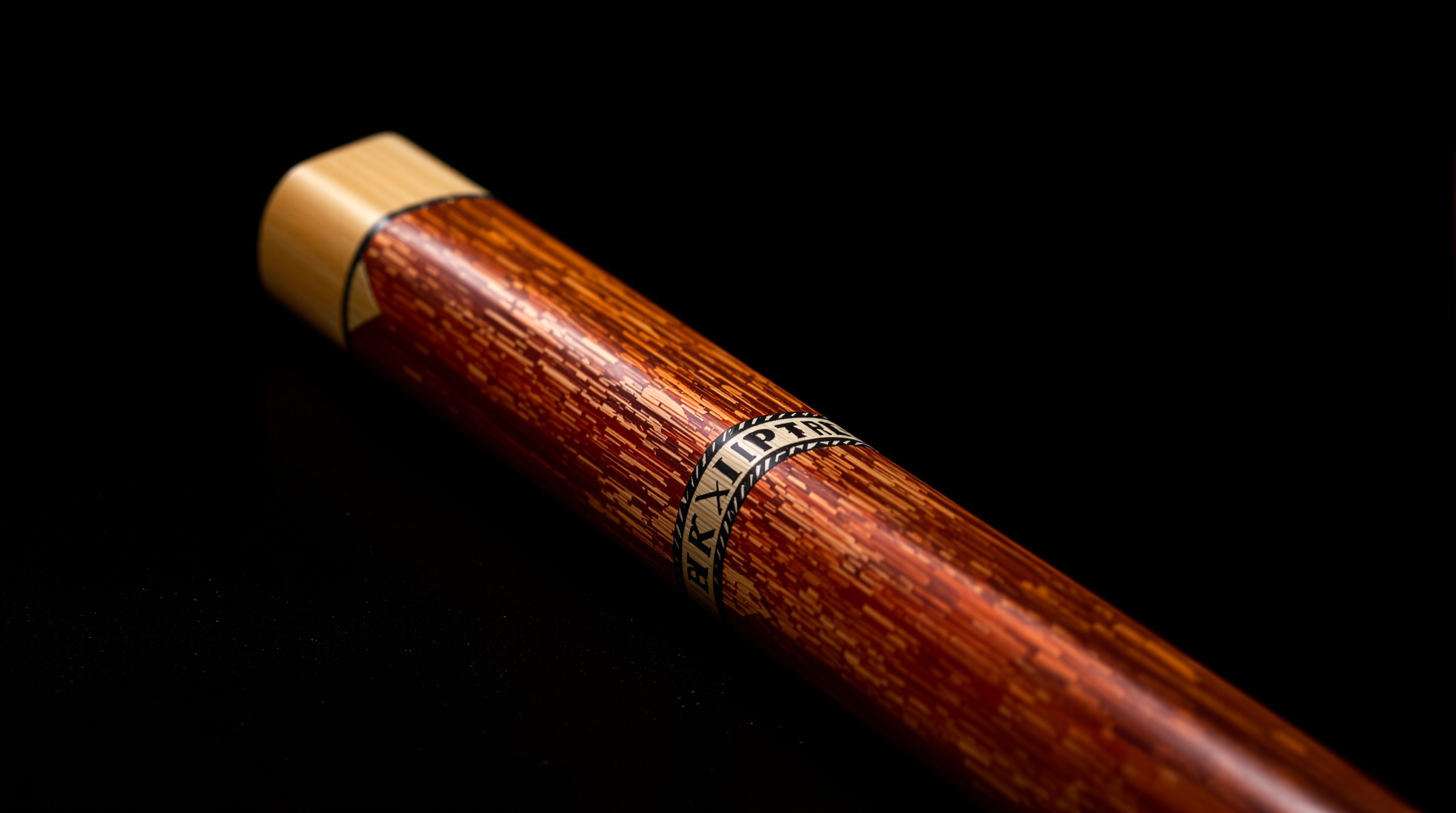
Equally unusual is the tapered bore — wide at the top, narrowing toward the base, and finally widening again at the very end. This gives the shakuhachi its uniquely haunting and sonorous voice, a tone that can feel like wind through a canyon one moment and a human cry the next.
How the Instrument Is Practised
Traditional study begins not with melody but with a single sustained note. Long-tone practice on ro, the fundamental of the flute, is the standard opening of a session: the player holds one note and listens to it change as the breath runs out, which is where the control over pitch, colour and volume is actually built. The honkyoku repertoire follows the same logic on a larger scale, with phrases measured by the breath rather than by a fixed metre, so no two performances of a piece are quite the same length.
A History Rooted in Zen
The story of the shakuhachi is a blend of speculation, legend and history, so it is to the tradition itself that we must turn to find the living thread coming down through time. Doing so, we discover that the underlying spirit of the shakuhachi is Zen.
According to tradition, the instrument was created in China in the ninth century by a follower of the Zen master Fuke, as a way of continuing the sound-essence of the master's begging bell. The practice passed into the thirteenth century, when it was transmitted to a Japanese priest studying in China who carried it home to Japan. There, the still-formless practice of blowing the shakuhachi was gradually formalised by flute-playing mendicant monks called komuso, the "monks of emptiness," and eventually became a sect of Rinzai Zen, the Fuke-shu. By the seventeenth century the Fuke-shu was a recognised religious order that used the shakuhachi for group chanting and individual meditation.
The strictly religious tradition came to an end under the Meiji government, which disbanded the Fuke-shu in 1871. Until then the shakuhachi had been played solely as a religious instrument. As the former monks merged with the wider culture, it became an instrument of entertainment as well — classical and folk melodies were added to the meditative honkyoku repertoire, and the shakuhachi joined the koto and shamisen as an ensemble instrument. Today's student may train in the religious and secular styles alike, and many players work to blend Eastern and Western musical sounds. For a scholarly overview, the Library of Congress and major museum collections document this evolution in detail.
The World Shakuhachi Festival's instrument overview gives a broader chronology alongside the Fuke tradition: it dates the shakuhachi's introduction to Japan to around the end of the seventh century and its present form to the seventeenth. It also describes Zen monks playing it as religious discipline and musical meditation during the sixteenth through nineteenth centuries. The distinction helps a reader follow two threads: the development of a physical instrument and the spiritual meaning carried by its practice. The earlier arrival date concerns the instrument's history in Japan; the legend above concerns the tradition's account of its meditative purpose.
The Maker: Peter Ross
Peter Ross is a shakuhachi teacher, performer, flute-maker and recording artist who has long lived and worked in the Seattle area. He began his studies with F. K. Nagao in 1972 in Hawaii. While living there he started making flutes from bamboo and taught at a community college in Hilo. In 1976 he began studying with Masayuki Koga in San Francisco, and when Koga moved to a Zen centre in Minneapolis, Peter moved there with his family.
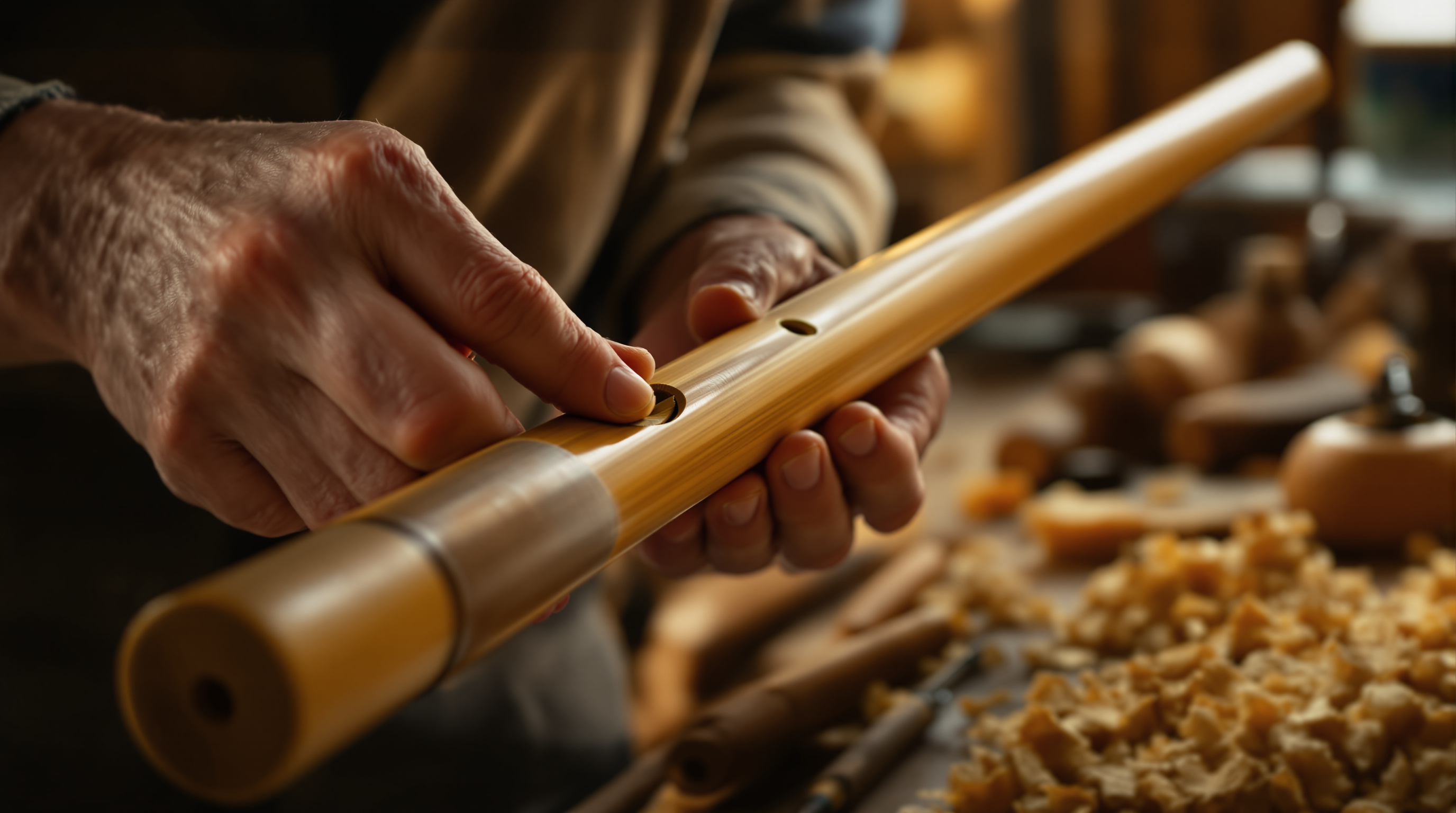
In Minneapolis he began making flutes from quality hardwoods such as rosewood and cocobolo — becoming the first flute maker outside Japan to craft hardwood shakuhachi. During a fourteen-year stay he taught the instrument and performed regularly. More recently he has studied with Ray Brooks, Teruo Furuya, Marco Lienhard and Akikazu Nakamura. Since 1992 he has lived in Seattle, where he is active as a performer, teacher and maker.
As a player, Peter brings a strikingly personal style to the shakuhachi. He plays with great feeling and creativity, and his lifelong love of jazz improvisation lets him transcend the traditional playing styles. His music has appeared on soundtracks for film and television, and he is a founding member of the world-music group Journey East.
Teaching, Recording & Performing
Peter teaches in the traditional way, drawing on three playing styles — Tozan-ryu, Kinko-ryu and Watazumi-do — while also encouraging students to improvise and compose their own music. Most of his students are not trained musicians; they are engineers, nurses, builders, programmers and artists, drawn to the practice by something the sound awakens in them.
As a studio musician his ability to improvise across many flutes and moods has kept him in demand. His playing has featured in documentary and corporate film work, and his music has accompanied tai chi, yoga and modern dance. He gives concerts throughout the Pacific Northwest, performs each year at a major regional folk-life festival, and has played at Japanese gardens and international shakuhachi gatherings. He is also available for lecture-demonstrations on the instrument and its tradition.
Read the feature article "Blowing Zen — The Life Work of Peter Ross", browse the flutes he crafts, or explore his recordings.