Home › Flutes
Every flute offered through Cloud Hands Music is made to be played for a lifetime. The selection ranges from affordable natural-bore practice instruments to rare root-end ginashikan shakuhachi suited to the deepest Zen repertoire, alongside the transverse bamboo flutes heard on Peter Ross's own recordings.
Flutes Crafted by Peter Ross
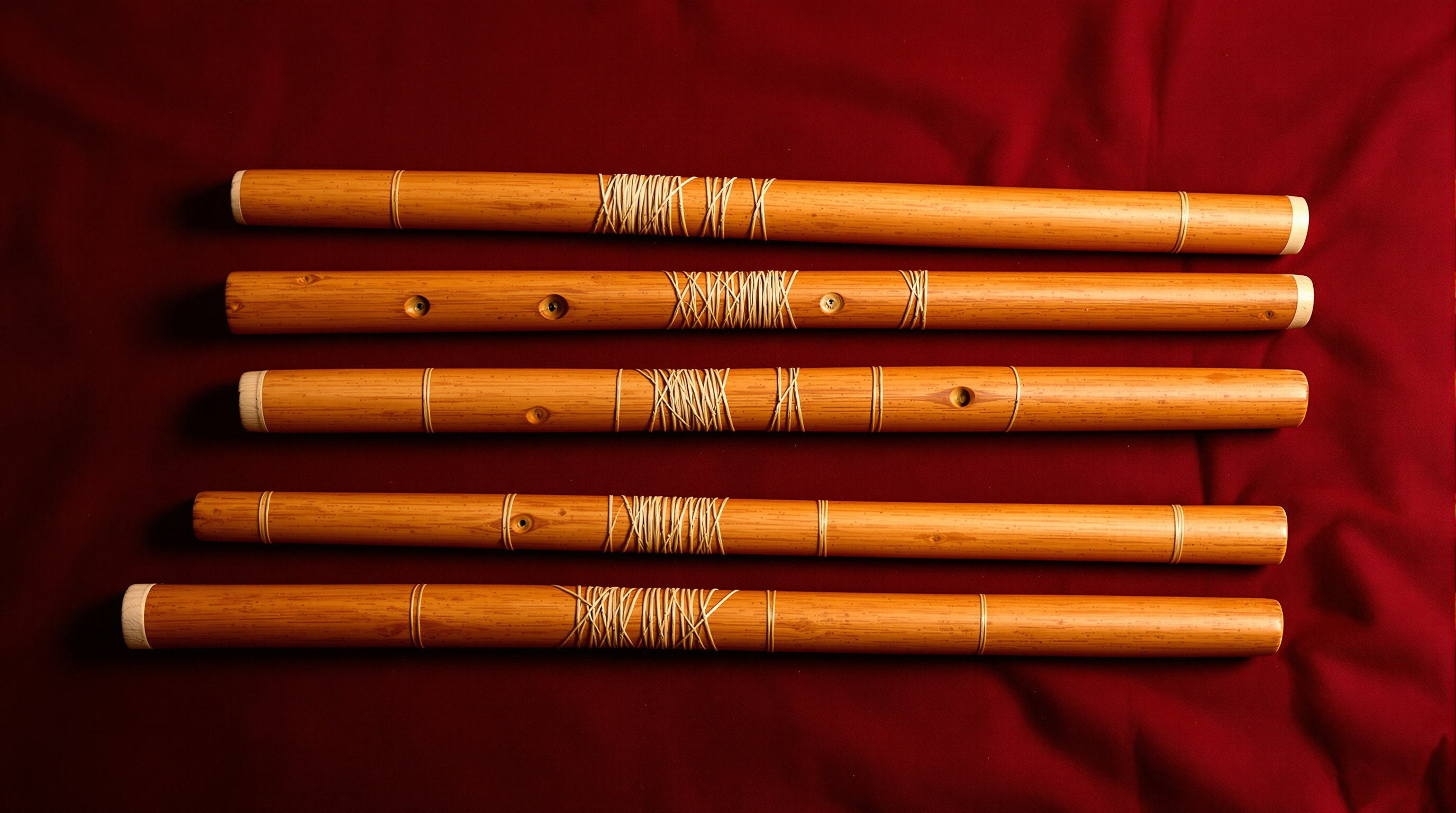
Peter's instruments draw on decades of making and playing. Each flute is shaped, tuned and finished by hand, then tested by the maker before it is offered for sale. His shakuhachi are made from various bamboos — Japanese madake and black or yellow Chinese bamboo — while his transverse flutes are crafted from bamboo with exotic hardwood mouthpieces. See the full range on the flutes crafted by Peter Ross page.
Flutes by Japanese Master Craftsmen
Cloud Hands Music also makes available instruments by celebrated Japanese makers, imported directly from Japan. These have included flutes associated with the workshops of Kobayashi Ichijo, Kimura Kanzan and Tom Deaver, as well as fine pieces from Peter's own personal collection. Availability of these instruments changes as they arrive; current pieces are noted on the news page.
Bamboo, Hardwood and Climate
Material is worth a thought alongside key and length. Bamboo gives the shakuhachi its characteristic breathiness and is what the tradition is built on, but it is sensitive to sudden changes in humidity. Turned hardwood instruments answer that difficulty: they are denser, more stable through a dry winter or a cold tour, and far less likely to crack, at the cost of a slightly more focused voice. Players in harsh climates, and those who travel with an instrument, often keep a hardwood flute for the road and a bamboo one for home.
The traditional shakuhachi uses thick-walled madake bamboo, Phyllostachys bambusoides. Four front holes and one back hole give a pentatonic scale, while partial hole closing, head movements and changes in embouchure extend its musical range. Length and bore finish describe different aspects of the instrument: the standard 1.8 is 54.5 centimetres, while jiari and jinashi distinguish an interior treated with paste or lacquer from one largely retaining bamboo's natural lining. The guide to shakuhachi bamboo explains these terms alongside the ginashikan description and separates madake from the henon bamboo studied in flowering research.
Choosing the Right Flute
Flutes are identified by their key and their length. A beginner studying the traditional repertoire most often starts on a 1.8 (D) shakuhachi — the standard study size — while longer flutes such as the 2.4 (A) offer a deeper, more meditative tone. The full set of sizes and their Japanese names is laid out on the flute keys and sizes page.
- Beginners — a natural-bore bamboo shakuhachi or a two-piece hardwood shakuhachi in 1.8 (D) is an excellent, forgiving starting point.
- Meditation & honkyoku — a longer ginashikan (natural-bore, no filler) flute gives the sweet, mellow tone prized for Zen playing.
- World & improvised music — the Arabian shakuhachi and the transverse bamboo flute open up scales and colours beyond the traditional repertoire.
If you are unsure which instrument suits your playing, the descriptions on the flutes page explain the character of each model. To see how the instrument has been made across the centuries, you can also explore historic shakuhachi in museum collections. When you are ready, the order page explains how to enquire and purchase.