Home › Flutes
How Shakuhachi Are Sized
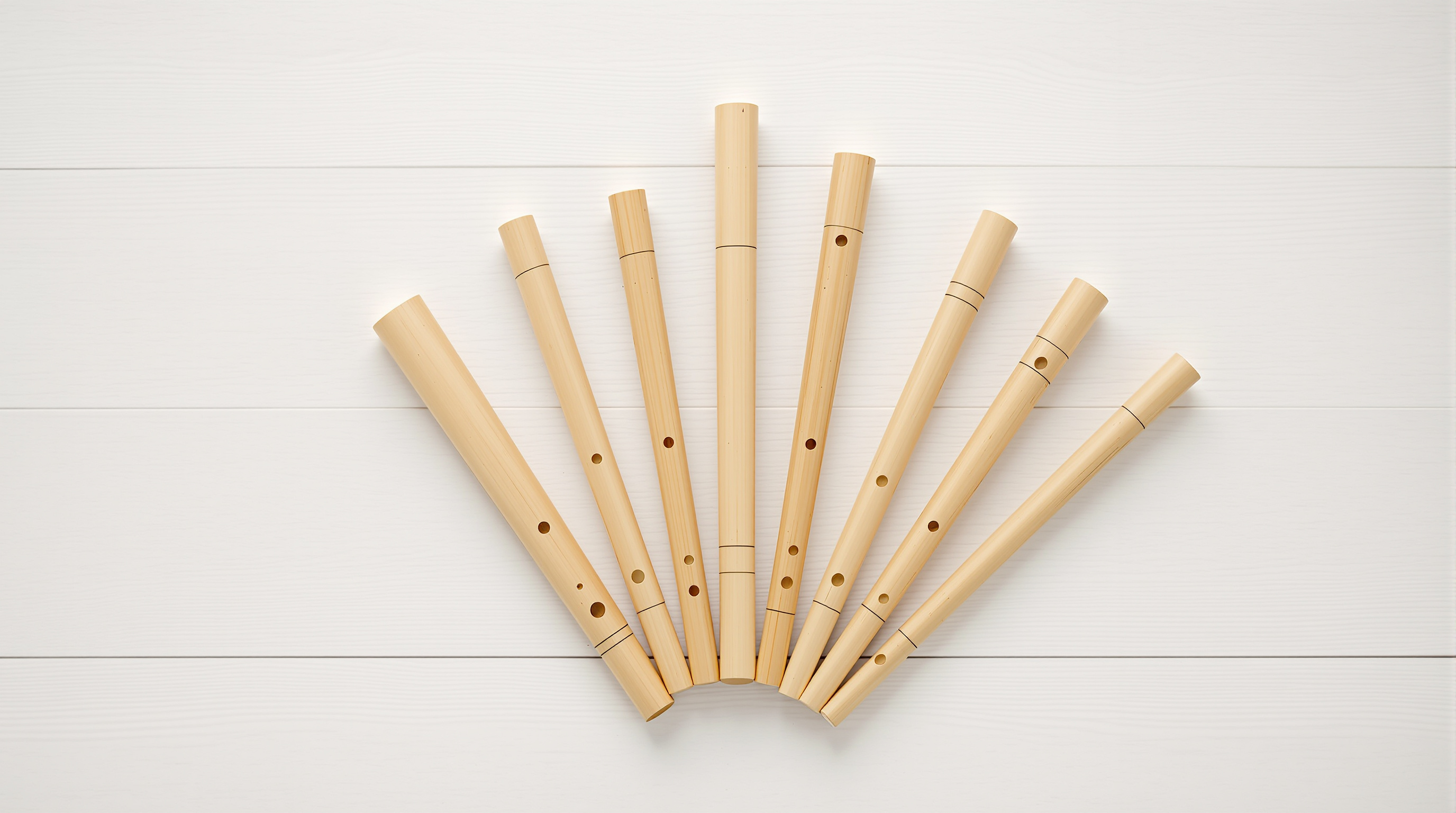
The name "shakuhachi" itself comes from a length: isshaku hassun, one shaku and eight sun, the 1.8 flute that sounds a D and is the traditional size for study. Shorter flutes sound higher and feel quicker under the fingers; longer flutes sound lower, with the wide finger-spacing and deep, breathy tone prized for meditative honkyoku playing. When choosing a first flute, most students begin with the 1.8 (D) before exploring longer or shorter sizes.
Reach, Comfort and the Playing Hand
Because the choice is partly physical, it is worth thinking about the hands as well as the ear. The wide hole spacing of a 2.4 or a 2.7 asks for a genuine stretch, and a long session of slow honkyoku phrasing can tire the fingers and forearm in a way a short 1.6 never does. Studies of musicians' health have examined how playing-related pain tracks with practice habits, and the NIAMS overview of overuse injury covers how tendon and joint complaints tend to arise. The remedies are unglamorous: a flute sized to your own hand, breaks inside a long practice, a teacher who watches your posture. Players who read further into tissue recovery meet a much noisier literature, so it helps to go back to the papers — an indexed bibliography of the tissue-repair research literature gathers those primary sources in one list. Persistent pain is a question for a clinician, not for a different flute.
Traditional Model Sizes
| Key | Japanese Name | Size | Length |
|---|---|---|---|
| G | Isshaku San Sun | 1.3 | 40.0 cm |
| F♯ | Isshaku Yon Sun | 1.4 | 43.0 cm |
| F | Isshaku Go Sun | 1.5 | 46.0 cm |
| E | Isshaku Roku Sun | 1.6 | 48.5 cm |
| E♭ | Isshaku Nana Sun | 1.7 | 52.0 cm |
| D | Isshaku Ha Sun | 1.8 | 54.5 cm |
| C♯ | Isshaku Kyu Sun | 1.9 | 59.0 cm |
| C | Ni Shaku | 2.0 | 62.5 cm |
| B | Ni Shaku I Sun | 2.1 | 66.0 cm |
| B♭ | Ni Shaku San Sun | 2.3 | 70.0 cm |
| A | Ni Shaku Yon Sun | 2.4 | 75.0 cm |
| G | Ni Shaku Nana Sun | 2.7 | 84.0 cm |
Reading the Names
In the Japanese names, isshaku is one shaku and ni shaku is two; the following word gives the number of additional sun — san (three), yon (four), go (five), roku (six), nana (seven), ha (eight), kyu (nine). So a 2.4 flute is ni shaku yon sun — two shaku and four sun — and sounds an A.
Length, Pitch and Playability
Every increase in length lowers the pitch and widens the spacing between the finger holes. A short 1.4 or 1.5 flute is quick and bright, with holes that fall easily under a smaller hand; a long 2.4 or 2.7 sits much lower, with a broad, breathy voice and a reach that asks the fingers to stretch. This is why the choice of size is partly musical and partly physical: the flute has to fit both the repertoire you want to play and the span of your hands.
Players exploring the meditative honkyoku repertoire often gravitate toward the longer flutes, whose deep, sustained tones suit slow, breath-led phrasing. Those drawn to ensemble or folk playing frequently keep a 1.8 close at hand, since so much of the shared repertoire is written for it. Many players eventually own several flutes in different keys, choosing among them the way a singer chooses a key that flatters a particular song.
For more on how these lengths relate to pitch and playing, Encyclopaedia Britannica offers a helpful overview. To discuss which size suits your hands and your repertoire, see the flutes crafted by Peter Ross and the order page.